Wednesday, Jun 24, 2026
10:30 a.m. PT
San Francisco, CA
Transcript
The following transcript has been edited lightly for clarity.
Nicolas Petrosky-Nadeau:
Good morning. I’m delighted to kick off our latest EmergingTech Economic Research Network event, or EERN, for short. It is great to see such a strong showing here in San Francisco and online. My name is Nicolas Petrosky-Nadeau. I serve as Vice President in Economic Research at the Federal Reserve Bank of San Francisco.
The SF Fed’s EERN initiative has become a space for academics, business economists, researchers, and interested public to exchange ideas on how emerging technologies are reshaping our economy. Understanding how technologies like artificial intelligence influence productivity and the labor market is a key focus of our team’s research and business outreach that, in turn, helps inform monetary policy decisions.
Today’s program continues in that tradition, bringing forward new perspectives to help all of us make sense of how emerging technologies are rapidly reshaping the economy in real time. I am pleased to welcome Aaron “Ronnie” Chatterji, chief economist at OpenAI, who brings a unique front row vantage point on global AI implementation and economic trends. We’ll hear his insights in a conversation moderated by Sylvain Leduc, director of economic research here at the SF Fed. Ronnie and Sylvain will discuss OpenAI’s latest research on who’s using AI, what they’re using it for, and whether it’s creating real economic value at work and at home.
As a reminder, this event is being recorded and will be available on our EERN website following the discussion. Finally, please note that the views you will hear today are those of our speakers and do not necessarily represent the views of the Federal Reserve Bank of San Francisco or the Federal Reserve System. I’m excited for the conversation ahead. Please join me in welcoming Sylvain and Ronnie to the stage.
Sylvain Leduc:
Ronnie, welcome to the San Francisco Fed.
Aaron “Ronnie” Chatterji:
It’s great to be here.
Sylvain Leduc:
It’s really a delight to have you with us. We have many people online. They submitted a ton of questions, so there’s a lot to discuss. Before we get to that, I thought I would note that you’re also an academic. You’re a business professor, public policy professor at Duke, so you’ve done a lot of research on entrepreneurship innovation. In some way, it’s not so surprising to see you in this new role as chief economist at OpenAI, but for an academic, it’s a little surprising. I want to probe a bit more what enticed you to make the jump and attracted you to this new role.
Aaron “Ronnie” Chatterji:
Sure. Well, first of all, Sylvain, and to everyone watching here and on the livestream, thank you for having me. It’s an honor to be here at the San Francisco Fed. As an economist, there are institutions that resonate with you in your academic career, in your business career, in your policy career, and the Federal Reserve System, specifically the SF Fed, given its connections to a lot of the professors I had at Berkeley, is one of those institutions, so it’s really an honor to be part of this EERN series and I hope that I’ll offer some insights that are useful. The dirty secret about most of these things is I learn more from the questions than people learn from the answers, so I hope you’ll indulge me as we go through. But it’s an amazing chance for me to participate.
I did my PhD out here at Cal Berkeley. I was on a path from a very early stage to become an academic. My dad is an economics professor. My sister did economics as well. One of my other sisters did a PhD in a related field. So the conversations around the dinner table for us weren’t about entrepreneurship. They were really about social science and really about how economies grow. My dad had come from India and one of his biggest interests was how to spur economic development back where he came from and how to apply the tools of economics to understand that. So around the dinner table, we would have those conversations of social science be useful.
And so I had this idea both that it was important to be rigorous in the kinds of work we were doing. I would get asked about, “Is that a causal relationship, Ronnie, or is that just the correlation?” At the same time, it was very practical discussion. It was always anchored in trying to solve a real problem in the world. I think my parents and my sisters probably inadvertently set me on the path. I definitely wanted to do academia. But when I saw the chance, whether it was in government or whether it was in business to leverage those insights, I was going to take it. And that’s why I served in government two different times and why I took the job at OpenAI.
Sylvain Leduc:
Oh, that’s great. Thanks for sharing this. It makes a lot of sense. Okay, so we’re getting more and more data about AI adoptions, either by firm, by households. So let me just kickstart the discussion by showing some of it. I’m showing two things here. The blue column is from the Census Bureau. They’re conducting this regular survey of adoption, of use of AI by firms. And it’s been rising over time, right now we’re standing at about 20% of usage across firms. This is a nationally representative survey. What’s interesting is if you ask people in general, so here individuals between the ages of 18 to 64, the usage is much bigger than that, about double that rate, so about 40% of households, of individuals are using AI in one form or another. And this is coming from surveys that some of our colleagues at the St. Louis Fed have conducted.
Clearly OpenAI has a lot of data. You guys, you’re on the frontline, you see what people are doing with the technology. I know you’ve done research on this. Can you share a little bit of these results and how people are using it for the personal use and how they’re using it at work?
Aaron “Ronnie” Chatterji:
Yeah. I mean, first I’ll say this data from the St. Louis Fed co-authored with David Deming who later became our co-author on the paper I’m going to talk about, was really influential in our thinking. This kind of survey evidence, who’s using AI, how they’re using AI is incredibly important for informing what we do. One of the reasons that’s been really interesting for me to be an economist inside OpenAI is because I have access to the actual usage data. They’re using classifiers, I don’t read the messages, but we can use LLMs to classify the messages. So I can tell, okay, what are people using it for? Are they getting advice? Are they asking about movies? Are they doing business tasks? Of course, we have that data on the consumer side, which I’m going to talk about right now. And later maybe we’ll talk more about enterprise and some agentic tools like Codex.
So when I think about my role, I think about the data sets that I’m using sometimes in conjunction with each other, but the consumer is probably the richest data set out there. We have more than 900 million weekly active users. And so when you think about the largest representation of sort of users of AI on the consumer side, it’s the data set that we get to work with.
David Deming and I got together with some co-authors at OpenAI and said, “Okay, let’s write the canonical paper, how do people use ChatGPT?” And I should say for those of you who do research for a living, like you get to write that paper once in your life and it’s awesome to have a title that’s that clean, right? It was also necessarily going to be descriptive, which I had a lot of internal discussions about. Obviously people want to know what’s the effect of AI on some downstream outcome of interest, right? Sort of productivity or labor market outcomes, that’s very important and we’ll get to that.
But I thought, and I think about this in each product that we release and each kind of type of AI, whether we’re moving from like a chatbot to a reasoning model to agentic tools, let’s get the usage patterns understood. I feel like there’s so little understanding even of that. I’m a person who puts a heavyweight on descriptives and I think that’s important. That’s a bias I have.
We wrote the paper, we analyzed the data set. You can look at this paper, it’s an NBER working paper right now released last year. I’ll give you the bottom line, happy to talk and double click on any of this.
There’s really like three major uses of ChatGPT at the time we did the study in 2025. One is practical advice, guidance, people figuring out how to do things. The second is sort of what you might call information search, like the way you might use a web search. That’s another really popular one. And the third thing is sort of expressing yourself or writing. Those are like the different categories that you see.
When we first released this paper, I remember talking to a lot of reporters about this work, and that’s the cool thing, a lot of people are interested in it, they were sort of underwhelmed. And it’s disappointing when you write a great paper. What I thought was a great paper, I should be modest.
And I want to make sure the microphone is working. Is it okay?
When you write a paper like that, you’re so excited to share the information and then the person you’re talking to, a journalist said, “Well, that’s not that interesting. How is that going to drive productivity? How’s that going to show up in the GDP statistics?”
And you all know, as economists, and people who do this for a living that a lot of the value of technology is created through consumer surplus. And when you think about something like practical guidance, the free ChatGPT tool, a lot of that is going to be seen as consumer surplus.
Should I use this? Yeah, absolutely. Yeah. I can keep this though?
Okay, good, good. Sorry, is that better?
Okay, good. Let me know, and during the Q&A, if you missed any of that, let me know.
Sylvain Leduc:
We’ll ask ChatGPT.
Aaron “Ronnie” Chatterji:
We’ll ask ChatGPT to summarize it.
Sylvain Leduc:
…and better next time.
Aaron “Ronnie” Chatterji:
That’s just “ChatterjiGPT” is the official terminology there.
So what we found is there was a large amount of consumer surplus coming from AI usage. And so what’s interesting to me is when people are looking for AI in the productivity statistics, they’re often overlooking, and sometimes I think undervaluing, the amazing amount of consumer surplus from getting practical guidance on decisions. I mean, as economists, especially applied micro people, we study decision making. We study how people make decisions. And AI helping you make better decisions, hopefully, can be really, really important, even though that doesn’t show up in productivity stats.
The second thing I’ll say is the searching for information is a really important unlock. We’ve known that with traditional products for a long time, but that’s a big use of AI. And the expression piece is something that gets a lot of play, a lot of discussion. Our paper was able to quantify that that’s sort of a third category of usage, much less than the first two. And if you think about asking a question, doing something agentically, those are much, much more common than expressing, although that’s also an important part of the way people use ChatGPT.
So we saw this as sort of a source of truth to put out there. You can read the paper. We also put all the data available online so you can use this across nearly any country in the world, download data yourself, plot those trends. We update it quarterly as well so you can see how those things are changing over time. So that was kind of the main conclusion of the AI paper.
Sylvain Leduc:
People are using it at home and then using it at work, can you tell about that a little bit?
Aaron “Ronnie” Chatterji:
We can try to estimate work uses, and you guys doing empirical work know that that can be tricky, but in our paper we try to do that. And about 30% of the work on ChatGPT, or the messages on ChatGPT or the usage that we studied is for work from what we could tell in 2025.
It’s a complicated stat. A lot of people honed in on that because they were really excited that 30% was being used for work. Some people said, “Well, that sounds really low.” And I sort of thought about it like, “What if I showed you that on TikTok or Netflix, 30% of the activity was for work?” You’d be surprised, right? You’d think, “Wow, that’s amazing that Netflix and TikTok get so much work done.” But I think people were thinking and getting confused between the consumer dataset and the enterprise data set. The enterprise dataset was not part of that study. We have another study on the enterprise data set.
Just as an economist who’s communicating in public, you also realize that people think about AI, they’re not going to divide it into these categories that you have so neatly divided in your mind. Here’s the consumer’s dataset, here’s the enterprise data set. Now we have agentic tools like Codex, they’re going to think about it as AI. And so we try to do a better job to explain a lot of that work usage is people maybe doing things on their consumer account, but it certainly undercounts the use of AI at work because we don’t even have the enterprise data in that particular study.
Sylvain Leduc:
Can you say a little bit more about, I mean, you mentioned research, right? One thing that surprised me is how much I use it for ideation, kind of seeing what has been done, how you can combine ideas. Are people using it for this? Can you see this?
Aaron “Ronnie” Chatterji:
Learning is, I mean, a huge use case in ChatGPT. I think one of the reasons is that we have a younger platform. If you look at the percentage of users who are below 25, it’s enormous. It’s also reported in that paper and changing all the time, but a really large segment. A lot of the use cases for younger people is learning.
And I think about that a lot when I fly from North Carolina to San Francisco, like I do pretty much every week and I usually just talk to ChatGPT the whole time. And in the old version of my life where I traveled a lot, I would be typing or I’d be reading, but I’m actually really just talking to ChatGPT about an economics research idea, about how I’m managing my team. And I find that I’m learning so much about fields that I never wouldn’t be able to learn about before and going at a level of depth that I couldn’t go before.
And I find, at least, that it’s a complement to my expertise in a way that I know a little bit about development economics, but not a lot compared to the other fields, but I can ask the right questions. I know the authors, I know the right research questions. I know how to differentiate between a good study and a bad study.
For my children or my students, I worry and I want them to learn how to use ChatGPT in the best possible way. And that’s a big sort of consideration in the pedagogical sense. But for someone who’s seen as an expert in a field or a general field, it opens up so many opportunities to learn things that are new. It’s a big use case.
And the enterprise, also you see it’s a big use case too, learning things at work, which might surprise people. A lot of organizations are embracing these tools for learning and development use cases. Everyone at OpenAI, when you join, the best thing is to just send Codex after Slack and figure out, what do I need to know about my team, our context, and what we’re doing? That’s how you learn. And so it’s really changing the way people also acquire new skills at work, which I think is interesting.
Sylvain Leduc:
Okay. Thanks for that. Let’s switch a little bit on labor markets, because that’s one of the most important concerns that people have about the technology and the displacement that it could create in the labor market, particularly I think at entry level, for positions at entry level, right? There’s been concerns for recent graduates. If you look at the unemployment rate of recent grads, it’s been trending higher than the national average, which is really atypical.
You’ve got data, I’m sure you’ve done analysis on this, do you see this also? It could be a whole host of factors, could be AI, it could be other things, of course. What are you seeing on that? And maybe more generally, do you think of AI as complementing workers, substituting workers maybe at the moment, or maybe the technology will change in the future?
Aaron “Ronnie” Chatterji:
I think currently, and I’ll say something about the early career specifically to your question, but currently I see it as a complement to workers. And I think, I mean, that’s substantiated by a lot of uses in the job market. The unemployment rate in the United States, at least, is still below 5%. It hasn’t had the kind of substitution effect that many people are predicting. And the predictions keep getting updated with different end dates, but in some sense, if you ask them to predict what’s going to happen in the job market between now and the end of the year and hold them to it, a lot of those predictions about the way AI would affect the job market weren’t correct.
And so for me, I take a humble perspective. I don’t try to make a lot of predictions and particularly point estimates about the unemployment rate. I try to look at the data and try to understand what’s happening. And I do think right now AI has been a complement.
I do think on the early career stuff, that’s a place where we do have some good evidence that something could be going on. Erik Brynjolfsson’s paper, many of you know, probably all of you know now, “Canaries in the Coal Mine,” with a bunch of great co-authors from Stanford’s Digital Economy Lab. I now serve on the board, I should say, but there’s no conflict of interest. I didn’t write the paper. And you could argue that paper is sort of the best, sort of most rigorous study right now. I think there are a few others come out for other countries people might know in the audience, but in general, that’s the one that I’ve gone to say, look, pretty well done, trying to control for sort of reasonable covariates and confounding factors.
Even in that paper, the authors will say, look, interest rates are higher during this period. We have this COVID overhang. The younger population often takes it harder in certain cycles, parts of the business cycle. So lots of things, to your point, but it is weakness in terms of reduced hiring among that early cohort.
And trying to tag it to the introduction of ChatGPT is also interesting, because as ChatGPT increased in penetration, you probably want to also look at enterprise adoption where people work as much as you want to look at consumer adoption. So there’s so many things that they can continue to do in that study.
That’s the ones that I’ve seen that’s definitely shifted my priors in terms of how I think about the market. I think when the paper came out, I told my team like, “This is something we really have to pay attention to and look to.” Obviously this is the question we get the most.
I think since September 2025, I mean, the unemployment rate for early career has come down. And it’s still elevated compared to the general unemployment rate, but it’s actually been declining. So I’ve been watching that closely, trying to understand which industries are growing or shrinking and understanding is there a reallocation of young people to different sectors. I’ve been looking a lot at education and healthcare as two sectors that I think, and healthcare is happening already, but are potentially going to grow with AI. And so as much as I’m looking at the hiring rates, I’m also looking at allocation.
It’s something our team pays attention to. I would say it’s still a small part of the overall unemployment data, which is why it’s not showing up in the aggregate as much. We’re trying to look at how young people use AI differently. So we’ll release a paper in July about how early career people are using AI differently in enterprise than others. And so we’re trying to also touch this from different angles using the data we have.
The last thing I’ll say is my principle is always like, can I write a paper that leverages our unique assets, our data? Because you could write papers about everything in the world. How do you prioritize what you’re going to write about? What are the things that only we can do? So a lot of the labor market studies that don’t involve AI or something that the Census Bureau is going to put out that don’t require matching with our data, I would let them do that. For us, we’re going to use the usage data to try to understand how people are using it. That’s going to be our best value added to the world.
Sylvain Leduc:
So we have lots of students online that are joining us. So what would you tell them? For people that are currently studying, what’s kind of the skills they have to focus on to be a bit more competitive in the job market when they come out?
Aaron “Ronnie” Chatterji:
So as an economist, you get this question all the time. It’s a weird era to be an economist at an AI lab because usually nobody, you’re an economist, who wants to talk to you? So I’m on the sidelines of my kids’ basketball game and someone’s like, “Hey, what do you do?” And usually I have a boring job, right? But now for just, at least it’ll probably end tomorrow, but I have an interesting job. I have an interesting job. So the first question people say when I say, “Oh, I’m an economist who studies AI,” is like, “Oh, what should my kids do with their life?”
And obviously I teach students at Duke and I’m not doing that right now, but I have for a long time. So first I will say, I’ve thought about this a lot, I start with empathy. A lot of people who are coming to you are either parents who are worried about their kids and what they’re reading, or students who are graduating into a job market that even in the best of times can be confusing. If you’ve ever tried to look for a job right out of college, and for a lot of us, it’s more of a distant memory, it’s challenging even when the economy is good.
And so regardless of how much data you have, whether you’re an expert labor economist, before you pull out the charts, I would just advise all of us to have empathy for whoever you’re talking to. Because it doesn’t feel good if someone says, “Well, you know what? I’m having trouble.” And you say, “Well, the unemployment rate is actually…” We’re human beings at the end of the day.
So I start with empathy and then I try to provide some context and evidence about where we are in the job market, the trends we’re seeing, the growing areas. And then I start to think about the skills that you would want to acquire based on what I know. And I also think, again, and we need to do a better job with this across the industry is to have more humility in the recommendations we’re making. The things that I’m going to say are very human skills that I actually think are durable in any season, in any scenario. They also will be sort of human skills that I think will complement increasingly advanced AI. So I do think judgment and decision making will still matter.
We’re still going to need accountability when we use these tools. A business consultant, he used a less elegant framing to me, he said, “Look, you need a throat to choke.” You need somebody to hold accountable if things go wrong and humans are still that. And so there are going to be many humans in the loop complementing AI.
The other thing is, a human needs to make the decision at the end of the day, both for legal reasons in many cases, but also for credibility in your team. And so if you’re thinking about how to take a lot of information, make a decision that you can sell to your team as the right decision, that’s going to be a really important skill as well.
Third, cross-functional work is really important. I don’t know how many of you have gotten Codex generated or ChatGPT generated messages from other people, then you send one back with ChatGPT and it’s like, it’ll just be endless, right? At the end of the day, working cross-functionally also means not imposing tax on the people you work with and working with them effectively. And that’s also going to become a very human skill.
And so at the end of the day, I think ironically, after a decade of talking endlessly about STEM, which is still important, I think the humanities like, we should pay a little more attention than we have been because it’s going to be important as a complement to AI.
I do think though with all these things, for anyone who’s looking for a job or an early stage of their career, nobody can predict with perfect fidelity what the future is going to be like. I remember my parents used to say, “Look, there’s two safe careers. There’s engineering and there’s medicine.” And in general, that was decent advice, but what kind of engineering? Civil engineering versus software engineering? That decision was a big one when I was in school, and it could have gone either way if you look at job market trends and that. Medicine’s great, but trends in radiology and dermatology are different than emergency room medicine or primary care.
So these are things that, like, the idea that we had some straight path and someone could just point and say, “Plastics,” like that’s the industry. Sorry, only people over 45 laughed at that joke, but there’s a good reason for it. It’s from The Graduate, Dustin Hoffman. But you can’t just look and say “plastics,” it was never that way. So I think that’s how I think about this. Evidence comes after empathy and then you try to contextualize with some skills to be durable. And, above all, if you’re giving advice, try to be humble, because most likely you’ll be wrong.
Sylvain Leduc:
We work at the Fed, so humility, humbleness, we’ve learned. We’re humble.
Okay, let’s drill down a little bit about the future impact of AI. And a lot will be depending on how firms are adopting AI. And so I’m going to drill down a little bit on the data from the Census Bureau on firms adoption and not adoption. And what’s interesting with this survey is that they’re asking firms that are not adopting AI, why they’re not adopting. And I found this chart just staggering to be honest. You can see there’s a bunch of reasons that firms are listing. The one that about 60% of firms are saying is the main reason they’re not adopting is that it’s not applicable to them. I was really surprised by this.
Okay, I’m wondering, for you at OpenAI, if you’re seeing this as a true constraint on the potential of this market, on the size of this market. Are you seeing this maybe as an information gap that you have to fill in some way? Talk to me a little bit about this data.
Aaron “Ronnie” Chatterji:
It’s a great question. I mean, these surveys, and they’ve done similar ones in Europe and around the world, are super interesting to me and my team. And one of the coolest things about my job, I spend a lot of time doing research and speaking internally to audiences at OpenAI about economics. I do a lot of external. But one of the great things is just like I’m in the stream of all this kind of work. And sometimes it sends different signals and I have to think about how to operationalize it in our own work.
When I talk to businesses, the market is growing so fast from an industry that didn’t exist to something that’s getting pretty big, to something that will eventually probably be huge, that this kind of statistic doesn’t figure into my day to day, because I just feel like all I do is talk to enterprise clients who are hungry to learn about how to use AI.
But when I break down, I thought about this chart a lot and I think about who are the customers that are most rapidly adopting AI, they’re really in two different categories. One is sort of small entrepreneurial startups, like a lot of them based here in San Francisco that are thinking about AI native workflows from the ground up. It’s really difficult for an established company to just drop in AI into an existing workflow and expect it to work. There’s a little bit of process re-engineering and change management. Again, a role for a person, by the way, and senior leadership to make happen. You can’t just drop in AI and expect it to solve all those problems. Those entrepreneurial startups are starting from sort of point zero. So they’re able to do these things and adopting really fast. But they don’t represent, those fast-growing startups, a huge share to the raw count of firms, in the U.S. or around the world. So they don’t show up as much on the surveys.
The second thing I’ll say is larger enterprises and you’re seeing this in three key industries, like professional services like consulting, tech, big tech companies, as well as finance. And in those sectors, I’m seeing huge appetite for adoption and rapid adoption. If you look at the firms in those areas, we often see a divide between what you might call frontier firms. We released an industry report, we’re turning this into a more academic paper that will come out soon. But the industry report basically shows, it’s called B2B Signals. So if you’re a real nerd on the enterprise data, take that out. We have Signals for our consumer data, B2B Signals for our enterprise data. On the enterprise data, what we find is the frontier firms, defined as the 95th percentile, compared to the median firms, the 50th percentile, they’re using about three and a half times more tokens per user than the median.
Now that’s token usage. We’ll talk in a second about ROI and some other things we’ll get to, but there’s just a huge divide between firms that are using a lot of AI and firms at the median. And so you’re seeing kind of what you saw in the IT boom in the late 1990s documented by Nick Bloom, John Van Reenen and other co-authors, which is that there’s a huge divide in terms of how people are using AI, how much they’re using AI. We should pay attention to what casually maybe called the extensive margin and the intensive margin. I think we’re kind of past the point of just counting firms at this point. We also have to look at depth of use and you’re seeing these firms really sort of deeply using AI for workflows and using a lot of compute. That’s the things that we see in what we’re doing and paying attention to.
I think there’s a large number of SMBs (small and medium-sized businesses) though, and they might be represented in surveys like this or other ones. And part of this in the St. Louis survey, how you ask the questions matter, right? And so when you think about SMBs and sort of practical use of AI, that’s the work we have to do. We have to go to small and medium sized enterprises here and around the world and explain the value proposition for firms that are struggling with access to credit, with working capital and say, “Here’s how we can make your business more effective.”
That, to me, is what’s going on in data sets like this. For large enterprises, fast-growing enterprises, I do see a lot of AI adoption. So that’s how I’m trying to square some of the survey data with what we’re seeing on the ground.
Sylvain Leduc:
Okay. So talk a little bit more about this? So when you talk to the companies, what’s the application of AI that you think is most underestimated?
Aaron “Ronnie” Chatterji:
Okay, this goes back to the things that seem underwhelming, but I think they’re actually really important. Writing is the foundation of white collar work. We spend a lot of time thinking about AI’s impact on sort of white collar work and we are expecting fantastic end to end agentic solutions that solve every problem in your business. And there’s some interesting things. You’re expecting advances in drug discovery. There are some of those things. Semiconductor design, there are those things. What I find most interesting is how much I write at work and how AI has changed how much I write and how I write.
So now instead of writing a bunch of Slack messages on the way to work, Codex goes – Codex is our agentic tool. And I should remind myself, a lot of times I’ll talk about Codex and I think everybody’s using it, but I should remind myself not everyone is yet using it. But I use Codex, right? It goes out and takes all the Slack messages that I’m supposed to read and it creates a digest. It can also create a podcast if you want it. And just tells you, “Here’s what you need to know, here’s the ones you need to respond to.” It goes into and does the same thing to my Gmail, and then it goes to the same thing and does the same thing to social media and anyone who’s asking me questions there, and it puts all those things together and it figures out who do I actually need to write to and how. And it cleans up all the relevant inboxes that I need to, to make that happen.
Now it takes a while to build that workflow, it’ll get better and better, but for me it has changed the communication inside the firm in a huge way. The other thing is I don’t have to ask someone to catch me up on some long process. I just go to that Slack thread and ask Codex to catch me up on what happened. So I can save annoying questions or copying people who don’t need to be copied.
I think actually the biggest use case I see in most firms is how it affects the way we communicate. And eventually that’s going to change the way how we are organized, which tends to be a lagging indicator in many ways of how business is done. That is, to me, the most underappreciated part of how AI is being used.
Sylvain Leduc:
And this is applicable to most firms?
Aaron “Ronnie” Chatterji:
Including the Fed, right? I should say. But I’m sure-
Sylvain Leduc:
We communicate great.
Aaron “Ronnie” Chatterji:
Yeah, yeah, exactly, exactly. But we can all think about this in terms of how we can improve the parsimony of our communications, the clarity of it, and AI can help with that.
Sylvain Leduc:
Okay, let me emphasize another thing from this chart actually. The other thing that’s interesting is that firms … I mean, we hear a lot right now that the price per token is rising. We see more articles on this. If you ask firms about this and the Census is doing this, firms at the moment are not saying it’s too expensive. It’s not the main factor impeding adoption. But at the same time, I’m just going to show a chart here about tech prices. Tech prices have been going up. For us at the Fed, they’re adding a little bit more directly to inflation. So typically the contribution of tech prices like in equipment, for instance, and software, is negative, right? It contributes negatively to inflation. And now recently we’ve just seen this positive contribution.
So the question is this, how do you see this? Like a temporary blip? Maybe like if you look back at history in previous waves of innovation, what have we seen? Can we use this as a guide?
Aaron “Ronnie” Chatterji:
Yeah, I think we’re in the early innings of a big transformation. We’ll talk about it later. When I worked in government, I was responsible for implementing something called the Chips and Science Act. It was a $52 billion program to build semiconductor manufacturing in the United States. And remember at that time there were a lot of questions about how much demand we would have for chips, and people said, “We have to worry about over capacity,” which is a good concern. These industries have cycles. Now we’re in a world, and this includes equipment, right? So I mean, now if you look at PCE, it includes things like the hardware used to train models and do inference. And you all know that right now, there’s a huge bottleneck in the supply of the hardware to build compute.
So on one hand, we have increasing demand for tokens. People want to use AI. And on the other hand, you have bottlenecks in terms of supply, not just of the GPUs and the memory chips, but lots of other associated technologies that make things work in a data center, that connect to the grid, that facilitate interconnection. And even just look at energy transformers as like one way to think about this.
This, to me, is something that’s really important to watch and I think the capacity build out is going to be really important to watch for the next couple of years. I think given the investments we’ve made in the United States into chip production, given investments that are being made in Europe and Japan, this is something that we should watch in terms of see if supply and demand find sort of more equilibrium in that way or find more harmony.
I think in terms of the inference for models and the software side, I mean, there was a good paper from the Peterson Institute that came out that was basically showing inference costs coming way down. The other thing on inference is I think each model is much more efficient from a token perspective. I mean, so we can compare prices, but if I look at GPT 5.6 to 5.5, I think about how efficient the models are and how much intelligence they have. So we have to think about the quality of intelligence as well in these studies, too.
That’s kind of how I’m thinking about it on both sides. Those are the two things to watch. I do think though we’re in the early innings of a big transformation in the economy and this is kind of how I think about the data.
Sylvain Leduc:
Yeah, the measurement issues are not to be underplayed. It’s really important here. We’re getting close to the time here, but let’s touch base a little bit about supply chains in the semiconductor industry and you’ve got frontline experience on this. How well do you think the U.S. is positioned to meet the demand for AI, meet the demand for chips and data center constructions? How do you see the potential bottlenecks here?
Aaron “Ronnie” Chatterji:
I think we’re well positioned and I think it goes as a credit to bipartisan support for these kinds of efforts and multiple Presidents, to be honest, who’ve made that happen. I think the place to watch is labor in terms of how we can develop skilled labor to work in these fabs and in different parts of the supply chain. It’s easy to say, okay, “Here are great jobs in a clean room,” and as soon as we give the price signal in terms of a higher salary, all these people are going to move from services into manufacturing.
You all know, and those who study labor, I think better than most, these career transitions are challenging. People have stereotypes about what it means to work in manufacturing. There’s gendered associations, and if you think about a workforce with a growing share of female workers, that really matters in terms of trying to supply more manufacturing workers. Think about location and how willing Americans are to move. You think about the technical skills and where you could acquire them. How many community colleges are now offering programs in semiconductor manufacturing more than they were before, but those programs and those seats need to expand.
So to me, the biggest bottleneck continues to be training people to do the jobs and getting people aware and excited about the jobs. I think when you’re in policy, you sort of have this tendency maybe to think, I can pull a lever and all of a sudden people will follow in terms of where the market forces are going and where the policy signals are. And those things take a much longer time. I think we all have learned that.
So I feel like the labor piece is the piece where we need to keep working. It’s the place that we need careful measurement and evaluation. I see a lot of programs being launched. I’d love to know from economists at the Fed and elsewhere if they’re working. And I think that really will be the big determinant of how the semiconductor industry, but in general, the whole supply chain for AI evolves in the United States.
Sylvain Leduc:
Yeah, the adjustment costs are really important. Often we downplay them in modeling, but they’re really important and really present.
I think we’re at time. Ronnie, this has been fantastic.
Aaron “Ronnie” Chatterji:
Thank you.
Sylvain Leduc:
Thank you so much for joining us today. For those online, thank you for joining us also. We’ll have our next event, Huiyu Li, one of my colleagues, will be having a discussion with Lawrence Schmidt from MIT about AI’s impact on labor and wages. There’s still more to be learned about this topic. Really, it’s a main topic of concern.
Ronnie, thanks so much for being with us today.
Aaron “Ronnie” Chatterji:
Thank you for having me.
Sylvain Leduc:
And people online, thank you for joining us.
Summary
Aaron “Ronnie” Chatterji, chief economist at OpenAI and Sylvain Leduc, director of economic research at the Federal Reserve Bank of San Francisco, held a live discussion on the economic value of AI in both professional and personal use.
Our speakers discussed OpenAI’s latest research on who’s using AI, what they’re using it for, and whether it’s creating real economic value at work and at home.
This was a virtual event hosted by the EmergingTech Economic Research Network (EERN). You can view the full recording on this page.
Subscribe to notifications of future EERN events and our monthly SF Fed Newsletter.
About the Speakers

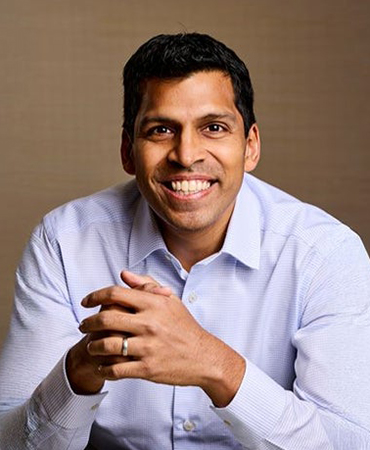
Sylvain Leduc is executive vice president and director of research at the Federal Reserve Bank of San Francisco. In addition to his ongoing research on monetary policy, business cycles, and international finance, Sylvain oversees the development of key economic research and analysis that informs the decision-making process on monetary policy. Read Sylvain Leduc’s full bio.
Speaker’s Related Research:
Related: