
The SF Fed engages with businesses and communities across the region to gather real-time information on local economic conditions. These insights provide important context to quantitative data and analyses that the Federal Reserve uses to guide its monetary policy efforts.
We also work to connect constituents with research, expertise, and networks that strengthen local economies. In this way, regional engagement furthers the SF Fed’s mission of advancing the nation’s monetary, financial, and payment systems to build a stronger economy for all Americans.
The Federal Reserve’s system of 12 Reserve Banks, with the SF Fed representing the western states, helps ensure that local and regional perspectives inform Federal Reserve policies, actions, and decision-making.
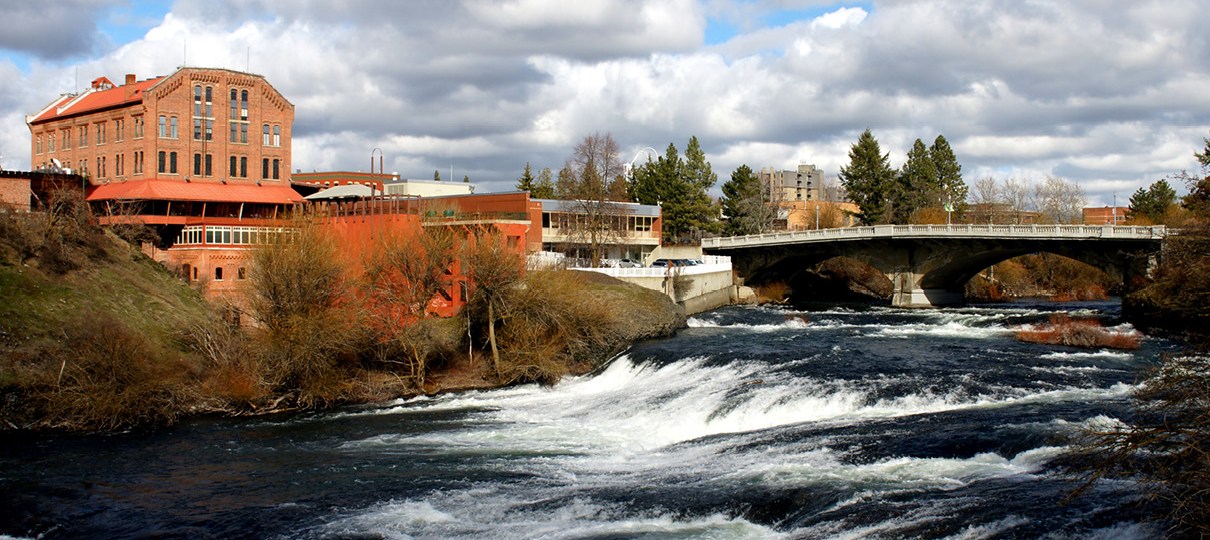
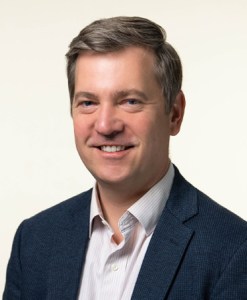
Here’s a snapshot of what we learned during a recent outreach visit to Spokane and the surrounding region from Christina Prkic and Ian Galloway, Regional Executives of the Seattle and Portland branches, respectively, at the SF Fed.
Discovering the Inland Northwest’s Economic Hub
Washington state is served by our Seattle and Portland branches, where we, Christina Prkic and Ian Galloway lead as Regional Executives, respectively. A big part of our role is to foster ongoing dialogue with local business and banking leaders across the region to deepen our understanding of how different businesses are experiencing the economy in real time.
This year, we teamed up for a joint regional engagement visit to Spokane and nearby areas. Our goal was simple: listen, learn, and understand the perspectives of the people we meet. They know their communities best, and their insights provide invaluable qualitative information that helps inform monetary policy.
“Spokane has really emerged as the economic heartbeat of the Inland Northwest,” Christina observed. “The way it connects Coeur d’Alene, Idaho, and Eastern Washington creates a regional economic ecosystem.”
“What’s particularly interesting is how businesses operate across state lines here,” Ian added. “They see opportunities between Washington and Idaho, viewing the entire Spokane-Coeur d’Alene area as an ecosystem. These kinds of insights from the Inland Northwest, and across the Twelfth District, play an important role in informing the Federal Reserve’s understanding of the regional economy.
Industries Driving Growth and Innovation
During our visit, we had the chance to explore several key industries that define the region’s economic character.
“The growth in the bioscience and biopharmaceutical sectors was eye-opening,” Christina said. “And the web of manufacturers along the I-90 corridor supporting the aerospace industry shows how interconnected the regional economy really is.”
We also spent time learning about the wood products industry, which provided insights into both traditional economic drivers and innovative approaches to modern challenges.
“The wood products conversations were informative,” Ian shared. “Seeing how these established businesses are evolving and adapting to new market demands really demonstrates the resilience of this region.”
Turning Challenges into Opportunities
One consistent theme throughout our meetings was how businesses approach obstacles—not as roadblocks, but as chances to innovate.
“I was genuinely impressed by the problem-solving mindset we encountered,” Christina remarked. “These business leaders don’t just accept challenges; they actively reframe them as opportunities. That kind of approach is essential for building resilient local economies.”
This resilience was adeptly illustrated during our tour of Mercer International, a wood products manufacturer. The company has developed a highly automated process to manufacture mass timber materials—a creative solution to address construction supply issues.
“Watching their production line in action was fascinating,” Ian explained. “It’s a perfect example of how industries can evolve to address current economic challenges. They’ve taken their expertise in wood products manufacturing and have begun to apply it to multifamily housing solutions, which addresses a critical need in many of the communities we serve.”
“One major takeaway was the innovation of the businesses we met. They reframe challenges as opportunities, which is crucial for building resilient economies.”
Christina Prkic
The Value of Ongoing Conversations
What makes these visits so valuable is that they’re not just one-time information-gathering exercises—they’re the beginning of ongoing relationships with the communities we serve.
“Our goal is to start a conversation that continues over time. We reach out to businesses regularly to understand changing conditions and invite them to share their insights with us.”
Ian Galloway
“We’re committed to continuing these conversations,” Christina explained. “We regularly check in with the people we meet to track how conditions are evolving over time.”
“These relationships help us gather real-time economic intelligence that complements our quantitative data,” Ian concluded. “When we combine both types of information, we get a much richer, more nuanced understanding of what’s happening on the ground.”
These visits and conversations help us understand the diverse economic experiences across our District. The insights we gain provide valuable context that informs the Federal Reserve’s monetary policy decisions as we work toward our mission of building an economy that works for all Americans.
Related:

The views expressed here do not necessarily reflect the views of the management of the Federal Reserve Bank of San Francisco or of the Board of Governors of the Federal Reserve System.